24/7 Emergency Roof Repair — Union City, NJCall (201) 330-4743
Union City Roof Repair

Chimney Flashing Repair in Union City, NJ

Union City's rowhouses share chimneys on party walls — one chimney, two owners, one flashing system. When it fails, both sides get wet. We rebuild it for the whole chimney.

  • Same-day chimney flashing repair service in Union City
  • No obligation
  • Local Union City roofers
Call (201) 330-4743

Emergency? We answer 24/7.

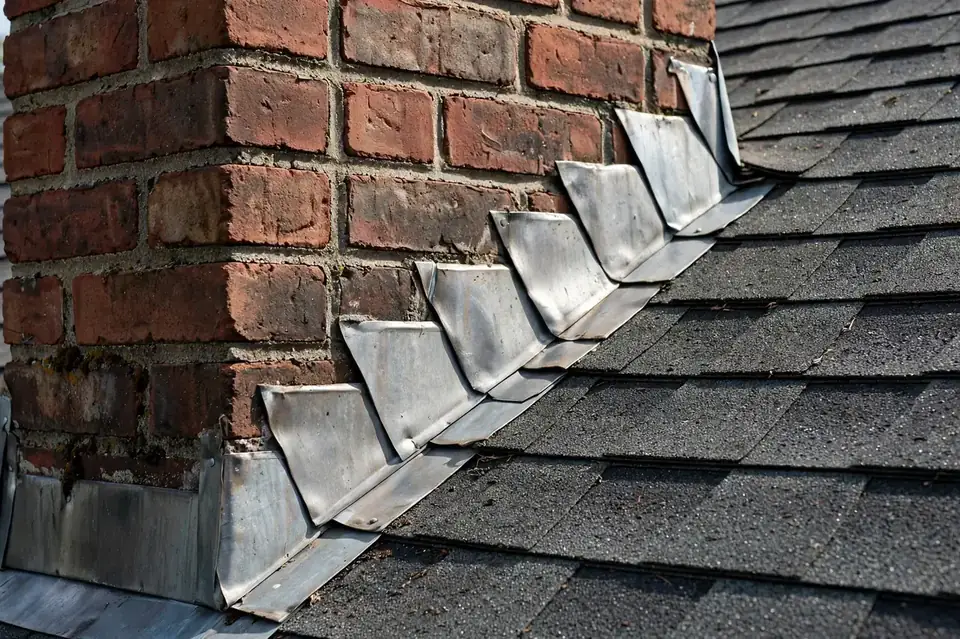
Chimney flashing where a brick chimney meets the roof in Union City NJ
Chimney flashing

Why Chimneys Leak Where They Meet the Roof

Flashing is the metal transition that seals the joint where your chimney passes through the roof — the one place on the roof where two completely different materials, moving at different rates, have to stay watertight together. Brick expands and contracts with temperature. The roof deck flexes under wind and foot traffic. The flashing bridging them absorbs all of that differential movement, year after year, while sitting in the most weather-beaten square feet on the roof.

A proper chimney flashing job is actually four components working together. Step flashing — small L-shaped metal pieces woven into the shingle courses up both sides of the chimney. Counter flashing — metal set into the chimney's mortar joints, folded down over the step flashing to shed water onto it. Apron flashing across the downhill face. And on wide chimneys, a cricket — a small peaked diverter on the uphill side that splits water around the chimney instead of letting it pond against the masonry. When any one of these fails, water gets behind the system and into the house.

Signs your chimney flashing is failing

  • Water stains on the ceiling near the chimney — the classic symptom. Stains on the top floor or in the attic around the chimney chase mean water is getting past the flashing.
  • Damp or spalling brick — masonry that stays wet, or brick faces flaking off, suggests water is entering at the roofline and wicking into the chimney.
  • Rust streaks down the chimney — corroded flashing or fasteners bleeding rust onto brick or shingles.
  • Visible gaps or lifted metal — flashing pulling away from the chimney or shingles, visible from the ground with binoculars.
  • Cracked or missing sealant — dried, split caulk lines where counter flashing meets the brick.
  • Musty smell in rooms adjacent to the chimney — slow, chronic flashing leaks often announce themselves by smell before they show as stains.
Why it fails

What Causes Flashing to Fail

The root cause is movement. Brick and wood framing expand and contract at different rates through every freeze-thaw cycle, and the flashing caught between them flexes thousands of times over its life. Eventually sealant cracks, mortar joints holding the counter flashing loosen, and step flashing works free of the shingle courses.

  • Deteriorated mortar is the quiet killer: counter flashing is only as good as the mortar joint it's embedded in, and soft, crumbling mortar lets the whole counter flashing assembly shift.
  • Missing crickets doom wide chimneys — without a diverter, water and ice pile against the uphill face and force their way behind the apron flashing.
  • Corrosion eats through thin or dissimilar metals, and
  • wind-driven rain exploits every small gap the other causes create. A roofer diagnosing your chimney is tracing which of these started the failure, because resealing a symptom without fixing the cause buys months, not years.
Assessment

What a Roofer Examines Around Your Chimney

Chimney flashing can't be assessed from the driveway. When we connect you with a local roofer, the inspection typically covers:

  • Step flashing — each piece checked for corrosion, displacement, and whether it's still properly woven into the shingle courses.
  • Counter flashing and mortar joints — whether the metal is still seated in sound mortar or the joints have gone soft.
  • Chimney crown and cap — cracks in the crown let water into the masonry itself, mimicking a flashing leak.
  • Cricket (or its absence) — wide chimneys without diverters get a recommendation for one.
  • Apron flashing — the downhill face, where ponding water tests every seam.
  • Attic-side evidence — staining on rafters and sheathing around the chimney chase, which shows how long and how far water has traveled.

The inspection distinguishes a flashing problem from a masonry problem — they leak identically from inside the house, but the fixes are completely different.

The repair

How Chimney Flashing Repair Is Performed

1

Remove the failed flashing

Old step and counter flashing come out, along with the surrounding shingle courses that have to be lifted to access them. This is the labor-intensive part — there's no shortcut that lasts.

2

Address the masonry

Soft mortar joints get repointed so the new counter flashing has something solid to seat into. If the crown is cracked, that's repaired too — new flashing on bad masonry is money wasted.

3

Install new flashing

New step flashing is woven into fresh shingle courses up both sides; new counter flashing is set into the repointed mortar joints and folded over the step flashing. A cricket goes on wide chimneys that lack one.

4

Seal and verify

Seams are sealed, the surrounding shingles are re-laid, and the whole assembly is water-tested where possible. The roofer shows you the finished work before leaving the roof.

Honest scope

Reseal or Full Reflash?

  • Not every chimney leak needs new flashing. If the metal is sound and only the sealant has cracked, a careful reseal — old caulk removed, new sealant properly tooled — can buy real time. That's a legitimate, limited repair, and a roofer should offer it when the flashing itself is healthy.
  • A full reflash is the right call when the step flashing is corroded or displaced, the counter flashing has pulled out of failed mortar, or the system was installed wrong from the start (continuous flashing instead of step flashing, no cricket on a wide chimney). And sometimes the honest answer is that the masonry is the problem — a cracked crown or saturated brick leaking through the chimney itself. In that case flashing work won't stop the leak, and the roofer should tell you so rather than sell you a reflash.
Materials

Flashing Materials, in Plain Language

  • Step flashing comes as individual L-shaped pieces, typically aluminum or galvanized steel — each one sheds water onto the shingle below it, like scales.
  • Counter flashing is the second layer, embedded in the chimney mortar and folded down over the step flashing;
  • copper and
  • lead-coated copper last longest here but cost more, while aluminum is the common standard. A
  • cricket (also called a saddle) is the small peaked structure framed on the uphill side of wide chimneys — it splits water flow so debris and ice don't dam against the masonry.
  • Reglet is the groove cut or formed into the mortar joint that holds the counter flashing; when mortar softens, the reglet fails with it.
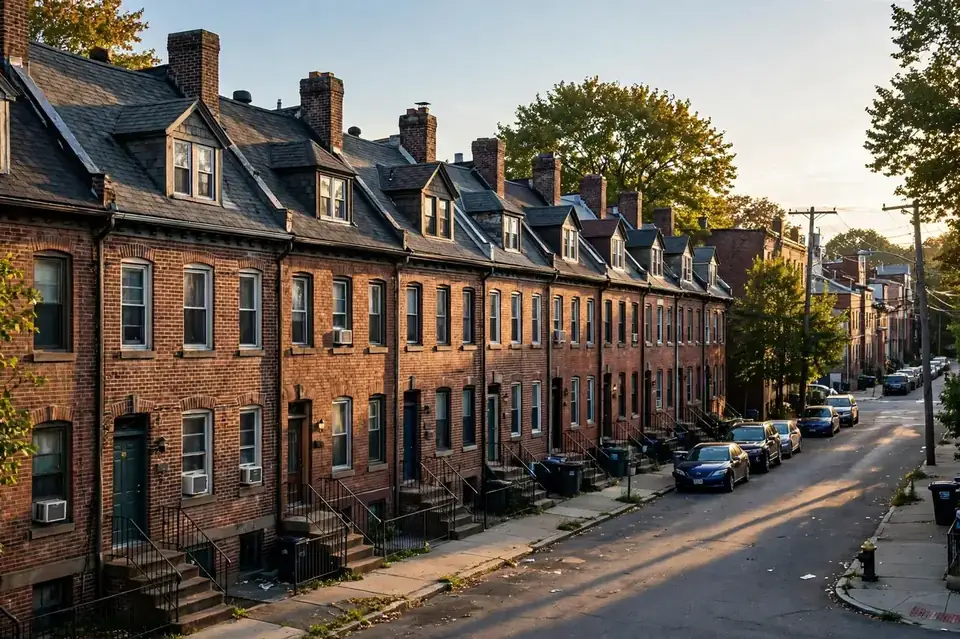
Brick chimneys on Union City NJ rowhouse rooflines
Union City, NJ — party-wall brick chimneys pierce nearly every roofline.
Local reality

Union City's Chimney Problem

  • Nearly every roofline in Union City is pierced by brick chimneys — and most of them are party-wall chimneys, shared between two attached homes. That matters for flashing in two ways. First, the chimneys are old: decades of freeze-thaw have worked on the mortar, and the counter flashing seated in that mortar has been moving with it the whole time. Second, a flashing failure on a shared chimney doesn't respect the property line — water entering at the joint can stain either unit's ceiling, which is worth establishing before repairs start so everyone's clear on what's being fixed and why.
  • The density adds wind exposure too: nor'easters drive rain sideways into every chimney joint, testing flashing the way vertical rain never does. If your chimney flashing is original to an older roof, assume it's living on borrowed time and get it inspected before the next storm season, not after.
Working with us

What to Expect When You Call

Tell the roofer where you're seeing water: ceiling stains near the chimney, damp smells, or visible gaps in the flashing. Note whether it leaks in every rain or only wind-driven ones — that distinction helps diagnose whether it's the step flashing, the counter flashing, or the crown. A local roofer will inspect the full chimney assembly, distinguish flashing failure from masonry failure, and lay out the scope before any work starts.

  • Ask: is this a reseal or a full reflash, and why?
  • What condition is the mortar in? And
  • does my chimney need a cricket? If the chimney is shared with a neighbor, ask how the work affects their side — a straight roofer will have a clear answer.

Active leak around the chimney?

Call (201) 330-4743 — 24/7. A roofer can apply emergency weatherproofing to stop the water now and schedule the permanent flashing repair after.

Cost factors

What Affects the Cost of Chimney Flashing Repair?

  • Chimney width is the biggest variable — a wide chimney means more step flashing pieces, longer counter flashing runs, and possibly a cricket that has to be framed.
  • Masonry condition comes next: sound mortar means the new counter flashing seats cleanly; crumbling joints need repointing first.
  • Roof pitch and access affect labor time, as does
  • how many shingle courses must be lifted and re-laid around the chimney.
  • Hidden damage — rotted sheathing or saturated framing discovered once the old flashing comes off — can widen the scope. And
  • material choice (standard aluminum versus copper) moves the number. An on-site inspection is the only honest basis for a quote.
Related services

Leaks That Get Confused With Chimney Flashing

Chimney leaks are routinely misdiagnosed, so it's worth checking the neighbors. Ridge cap damage above the chimney lets water in at the peak that tracks down to the chimney chase — if your caps are suspect, read the ridge cap repair guide first. Skylights near chimneys fail in similar ways and leak identically from inside; the skylight repair guide covers how to tell them apart. For the full picture, the Union City roof repair hub maps every service to its symptoms.

Common questions

Union City Chimney FAQ

How do I know if my chimney is leaking from the flashing or the masonry?

From inside the house they look identical, which is why the inspection matters. A roofer checks whether the step and counter flashing are intact and seated in sound mortar. If the flashing is good but the crown is cracked or the brick is saturated, the masonry is the source — and flashing work won't fix it.

Can chimney flashing be repaired, or does it always need full replacement?

It can often be repaired. If the metal is sound and only the sealant has failed, a proper reseal is legitimate. Full replacement — a reflash — is needed when step flashing is corroded or displaced, counter flashing has pulled out of failed mortar, or the original installation was wrong.

What is a chimney cricket and does mine need one?

A cricket is a small peaked diverter framed on the uphill side of a chimney. It splits water and debris flow around the chimney instead of letting them dam against the masonry. Wide chimneys without one are chronic leakers — a roofer will tell you if yours qualifies.

Why does my chimney only leak in wind-driven rain?

Wind drives water sideways into joints that vertical rain never reaches — typically gaps in step flashing or failed sealant on the windward side. Leaks that only appear in storms point to the flashing system rather than the masonry.

My chimney is shared with my neighbor. Who handles the flashing repair?

The flashing seals the joint for the whole chimney, so the repair benefits both sides. Talk to your neighbor before work starts — a roofer can explain what's being fixed and why, which usually settles the question quickly.

What factors affect the cost of chimney flashing repair?

Chimney width, masonry condition (sound mortar versus repointing needed), roof pitch and access, how many shingle courses must be disturbed, hidden sheathing damage, and material choice. A roofer needs to see the chimney to quote honestly.

How long does a chimney flashing repair take?

A reseal can be done in a few hours. A full reflash with repointing is typically a full day's work, since it involves removing old flashing, addressing the masonry, installing new step and counter flashing, and re-laying the surrounding shingles.

Shared Chimney Leaking? Fix It Once, Together.

documentation both owners can use.

Call (201) 330-4743

← Back to Roof Repair in Union City · Chimney flashing in Secaucus →

Call (201) 330-4743 — 24/7