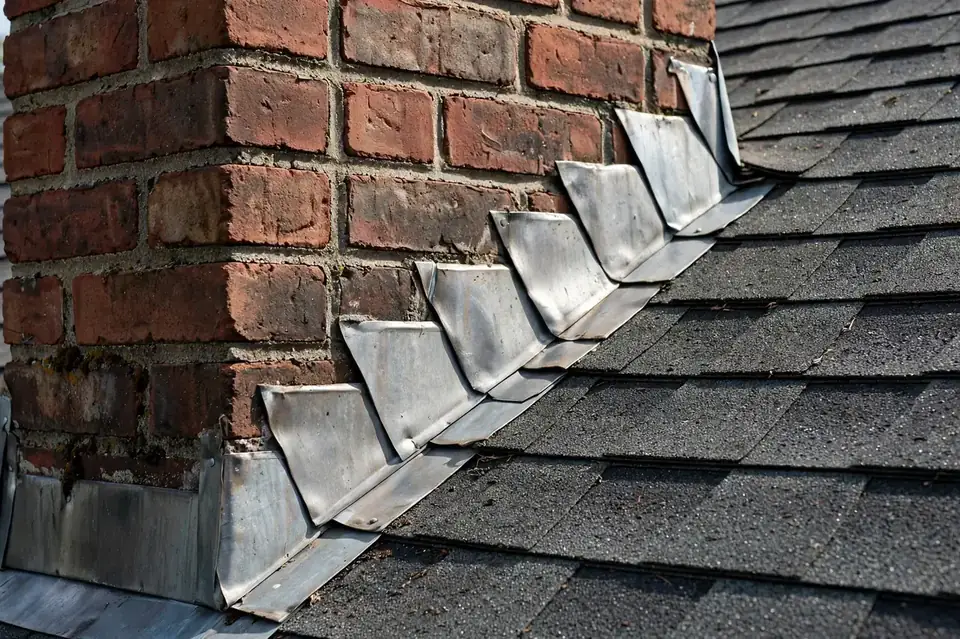
Every chimney flashing decision is the same math: the cheap fix now, or the real fix once. We'll show you which one your chimney actually needs — with photos, not pressure.
Emergency? We answer 24/7.

Where a masonry chimney punches through the roof, brick and shingles meet at an angle, expand at different rates, and shed water toward the same joint. Chimney flashing is the two-layer metal system keeping it watertight: step flashing — L-shaped pieces woven into the shingle courses up both sides — and counter-flashing, metal embedded into the chimney's mortar joints and folded down over the step layer so brick runoff is thrown outward, not behind it.
It's the hardest-working flashing on the roof. The counter-flashing depends on its mortar embedment holding; the step flashing on every piece staying flat and overlapped; the sealant bridging the two ages out. When it fails, water enters at the chimney base and runs down inside.
One caution: a leaking chimney isn't always flashing. Cracked crowns and deteriorated mortar admit water too — a good inspection distinguishes the two before any work is quoted, because they call for different trades.
Flashing leaks often run unseen for seasons — the decking around the chimney may need repair along with the flashing itself.
Shingles around the chimney base are lifted to expose the step flashing run, and counter-flashing is released from its mortar joints.
Corroded step flashing is replaced piece by piece, woven with the shingle courses; the uphill cricket is rebuilt to divert water around the chimney.
New counter-flashing is embedded into reground mortar joints — never face-nailed — folded over the step layer and sealed at the brick line.
Shingles re-laid over the new step flashing, joints repointed where opened, and the full chimney base water-tested.
Re-seal, re-flash, or rebuild? Sound metal, cracked sealant: a cut-out and re-seal is the most economical honest fix. Corroded flashing or counter-flashing pulled from failed mortar: the joint needs re-flashing. Rotted decking or a failing crown widens the scope beyond flashing. A re-flash quote that never checked crown and mortar is half a diagnosis.

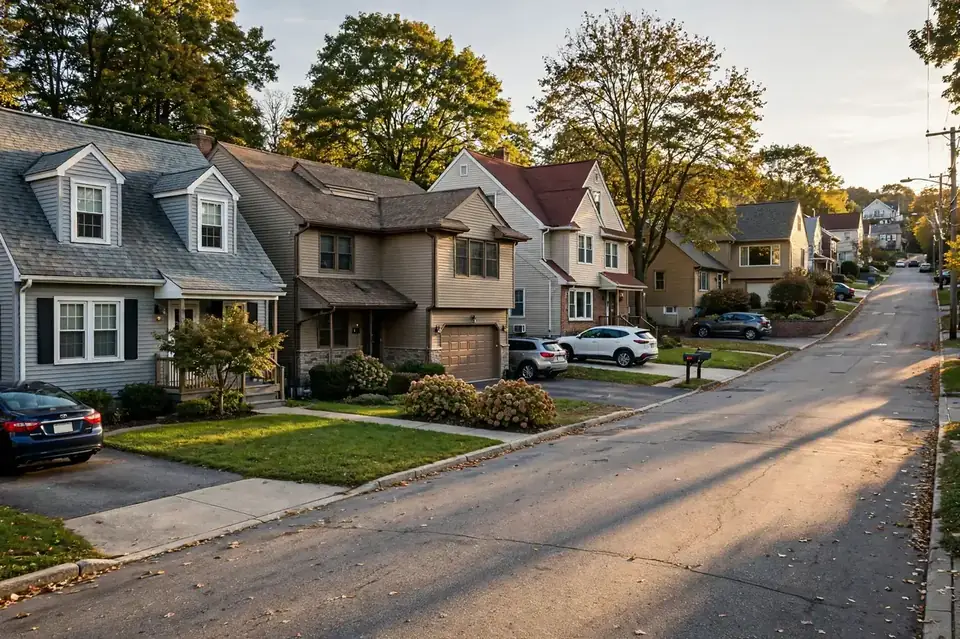
Two local realities bear on chimney flashing. Hilltop wind exposure drives rain sideways into the chimney-to-roof joint and works sealant edges season after season. And the mixed housing stock includes many older masonry chimneys whose mortar has endured decades of freeze-thaw — crumbling joints can't hold counter-flashing, so the flashing and masonry assessments become one job. A chimney that looks fine from the street can have joints too soft to grip new flashing; the mortar gets tested, not just eyeballed.
We'll connect you with a local roofer experienced in chimney flashing. Mention where staining appears relative to the chimney and whether it shows in all rain or only wind-driven storms. Expect a roof-level examination of flashing, mortar joints, and crown, plus a check below for the water's path. Before authorizing, ask whether the quote includes counter-flashing re-embedment (not just sealant), what metal is specified, and whether crown and mortar were assessed.
Water at the chimney base doesn't wait. Call (201) 330-4743 — 24/7. A roofer can weatherproof the joint to stop intrusion while the proper re-flash is scheduled.
Chimney flashing shares its failure timeline with the roof's other wind-exposed details. The ridge cap guide covers what hilltop wind does to the peak — often the same storm stresses both. If stains appear away from the chimney, the dormer repair guide explains how water travels inside wall cavities. And the North Bergen roof repair hub puts it all in context.
From inside, you often can't — both stain near the chimney. The distinction is made on the roof: is the counter-flashing still embedded in sound mortar, is the sealant intact, and are the crown and mortar themselves compromised? Flashing and masonry failure call for different work, so diagnosis comes before the quote.
If the metal is sound and only sealant cracked, cutting out and replacing the sealant is legitimate. But sealant over corroded metal — or over counter-flashing pulled from its joint — buys months, not a fix. The metal has to be sound for a re-seal to hold.
The failure is directional. Intact flashing sheds water running down; failed flashing admits water pushed sideways. Calm rain staying out while wind-driven rain comes in points squarely at the flashing joint.
Galvanized steel is economical until its coating wears; aluminum resists rust better; copper lasts generations at a premium. Installation matters most — embedded counter-flashing and woven step flashing — because even copper fails face-nailed. Ask what's specified and why.
Sometimes. Counter-flashing grips into mortar joints, so crumbling joints can't hold new flashing without repointing first. On older chimneys the masonry and flashing assessments are one job — make sure you know which you're paying for.
← Back to Roof Repair in North Bergen · Chimney flashing in Weehawken →